
 Log in
 Start Free Trial
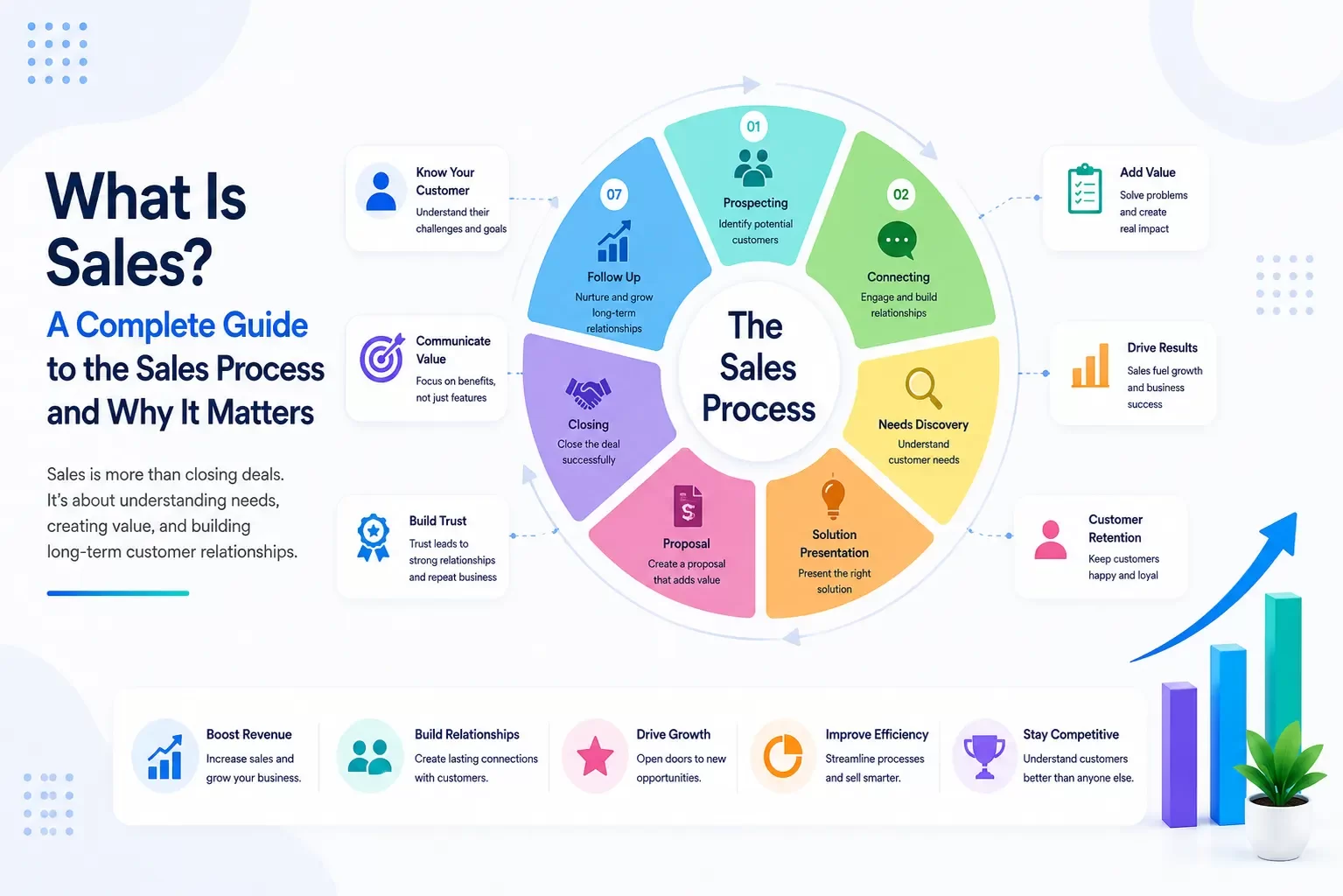
Every business depends on sales. Whether a company sells products, services, subscriptions, or software, sales are what transform interest into revenue. Without a structured sales process, even the best products can struggle to find customers.
Sales is much more than convincing someone to buy. Modern sales is about understanding customer needs, building trust, solving problems, and creating long-term relationships. Successful sales professionals act as advisors who help customers make informed decisions rather than simply promoting a product.
As technology continues to reshape the way businesses interact with customers, sales has evolved from a transactional activity into a strategic function supported by customer data, automation, and artificial intelligence. CRM platforms such as Arches CRM help businesses organize customer information, streamline communication, and manage opportunities more effectively throughout the sales journey.
In this guide, we'll explore what sales is, why it's important, the different types of sales, the sales process, essential skills, common challenges, and how CRM software can help businesses improve sales performance.
What Is Sales?
Sales is the process of identifying potential customers, understanding their needs, presenting solutions, addressing concerns, negotiating terms, and completing a transaction that delivers value to both the customer and the business.
The goal of sales is not simply to close deals but to build relationships that encourage repeat business, referrals, and long-term customer loyalty. Sales professionals serve as the bridge between a company's products or services and the customers who benefit from them.
Why Is Sales Important?
Sales generates the revenue that allows businesses to grow, hire employees, invest in innovation, and serve more customers. Without a consistent sales process, businesses often experience:
- Unpredictable revenue
- Missed opportunities
- Poor customer communication
- Low conversion rates
- Inefficient follow-ups
- Limited business growth
A well-managed sales strategy creates a predictable pipeline of opportunities while improving customer satisfaction and long-term profitability.
Types of Sales
B2B Sales
Business-to-business (B2B) sales involve selling products or services to other businesses. These sales cycles are often longer and involve multiple decision-makers.
Examples include:
- CRM software
- Manufacturing equipment
- Business consulting
- IT services
- Construction solutions
B2C Sales
Business-to-consumer (B2C) sales focus on selling directly to individual customers.
Examples include:
- Retail stores
- E-commerce
- Restaurants
- Fitness memberships
- Consumer electronics
Inside Sales
Inside sales representatives communicate with prospects remotely through phone calls, email, video meetings, and messaging platforms.
Outside Sales
Outside sales professionals meet customers face-to-face, visit job sites, attend trade shows, and build relationships through in-person interactions.
Consultative Sales
Consultative selling focuses on understanding customer challenges before recommending the most appropriate solution. Rather than pushing products, sales professionals act as trusted advisors.
The Sales Process
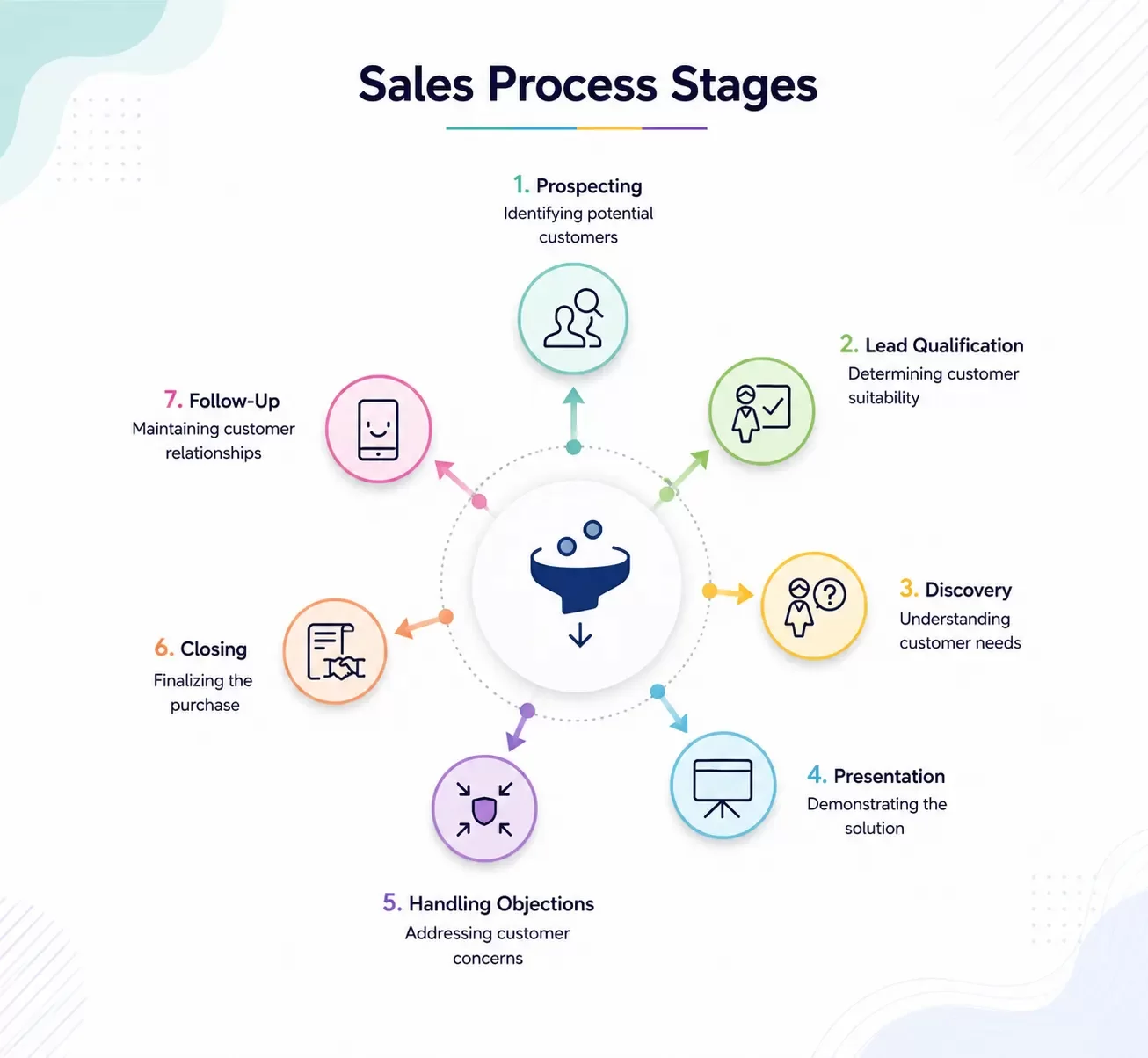
Although every organization has its own methodology, most sales processes include the following stages.
-
Prospecting
Identify potential customers who may benefit from your product or service.
-
Lead Qualification
Determine whether the prospect has the budget, authority, need, and timeline to purchase.
-
Discovery
Ask questions to understand the customer's goals, challenges, and priorities.
-
Presentation
Demonstrate how your solution addresses the customer's specific needs.
-
Handling Objections
Answer questions, clarify concerns, and build confidence in your solution.
-
Closing
Reach an agreement and finalize the purchase.
-
Follow-Up
Continue supporting the customer after the sale to strengthen the relationship and encourage repeat business.
Essential Sales Skills
Successful sales professionals develop a wide range of skills, including:
- Active listening
- Communication
- Relationship building
- Negotiation
- Problem solving
- Time management
- Product knowledge
- Emotional intelligence
- Organization
- Adaptability
The best salespeople spend more time listening than talking.
Common Sales Challenges
Many businesses struggle with similar sales challenges, including:
- Slow lead response times
- Lost opportunities
- Manual data entry
- Poor visibility into the sales pipeline
- Inconsistent follow-ups
- Lack of customer history
- Disconnected communication tools
- Difficulty forecasting revenue
These challenges often result in missed revenue opportunities and lower customer satisfaction.
How CRM Software Improves Sales
Modern CRM software helps businesses organize every stage of the sales process. Instead of relying on spreadsheets or disconnected systems, sales teams work from one centralized platform.
CRM software provides:
- Contact management
- Lead tracking
- Sales pipeline management
- Task management
- Workflow automation
- Email integration
- Call logging
- Customer communication history
- Reporting dashboards
- Revenue forecasting
With complete visibility into every customer interaction, sales teams can prioritize opportunities, respond faster, and close more deals.
How Arches CRM Supports the Sales Process
Arches CRM is designed to simplify sales management while helping teams stay organized and productive.
Key capabilities include:
- Automatic lead capture from multiple channels
- Visual sales pipelines
- Unified communication through email, WhatsApp, SMS, and phone
- Workflow automation
- AI-powered email drafting and summaries
- Task and appointment management
- Custom dashboards and reporting
- Real-time analytics
- Team collaboration
- Customer activity tracking
By centralizing customer data and automating repetitive tasks, Arches CRM enables sales professionals to spend more time building relationships and less time managing administrative work.
Best Practices for Improving Sales Performance
Organizations can strengthen their sales performance by:
- Responding to leads quickly.
- Maintaining accurate customer records.
- Following a structured sales process.
- Automating repetitive tasks.
- Measuring key performance indicators (KPIs).
- Continuously coaching sales teams.
- Using CRM software to manage opportunities.
- Building long-term customer relationships.
Small improvements made consistently often lead to significant gains in sales performance over time.
Conclusion
Sales is more than closing deals—it's about understanding customer needs, delivering value, and building lasting relationships. Businesses with a structured sales process are better equipped to generate predictable revenue, improve customer experiences, and scale efficiently.
Technology plays an increasingly important role in modern sales. CRM platforms like Arches CRM help organizations manage customer relationships, automate workflows, gain visibility into their sales pipeline, and make data-driven decisions.
Whether you're a startup building your first sales process or an established organization looking to improve efficiency, investing in the right sales strategy and CRM platform can help you achieve sustainable business growth.