 Log in
 Start Free Trial
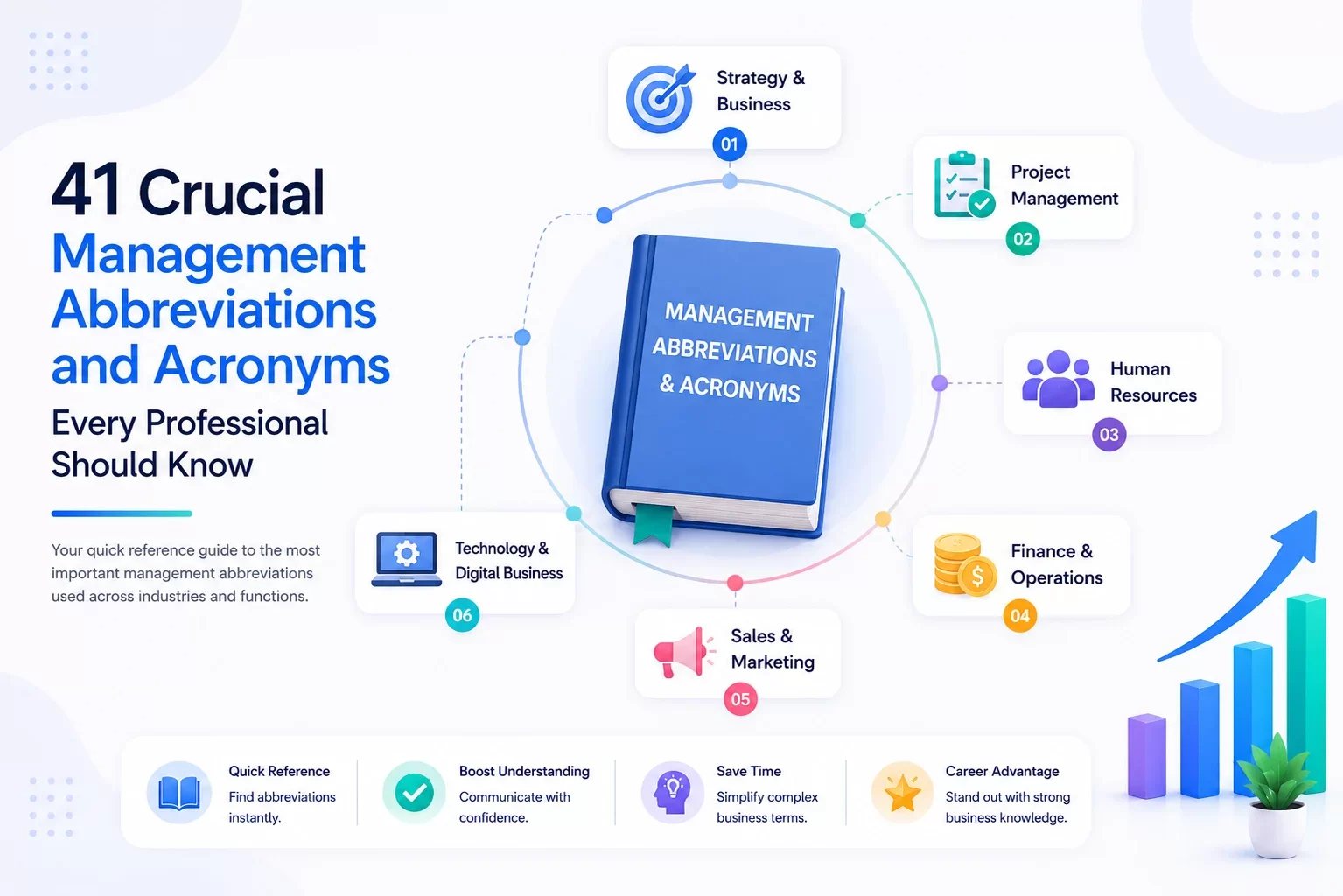
Business conversations are filled with abbreviations and acronyms. From project meetings and performance reviews to strategic planning sessions, managers frequently use shorthand terms that save time and improve communication. However, for new managers, employees, and even experienced professionals transitioning into leadership roles, these abbreviations can sometimes feel like a different language.
Understanding common management abbreviations helps improve communication, reduces misunderstandings, and enables teams to work more efficiently. Whether you're leading a small business, managing projects, overseeing operations, or working in corporate leadership, knowing these terms will make collaboration much easier.
In this guide, we'll explain 41 of the most important management abbreviations and acronyms, what they mean, and how they're used in the workplace.
Why Management Acronyms Matter
Management acronyms simplify communication, especially when discussing strategy, finance, operations, project management, human resources, and performance metrics. Instead of explaining lengthy concepts repeatedly, teams can communicate more efficiently using universally recognized terminology.
However, effective leaders also recognize that not everyone shares the same level of familiarity. When communicating with new employees, clients, or external stakeholders, it's always helpful to explain an acronym the first time it is used.
41 Essential Management Abbreviations and Acronyms
Strategy & Business
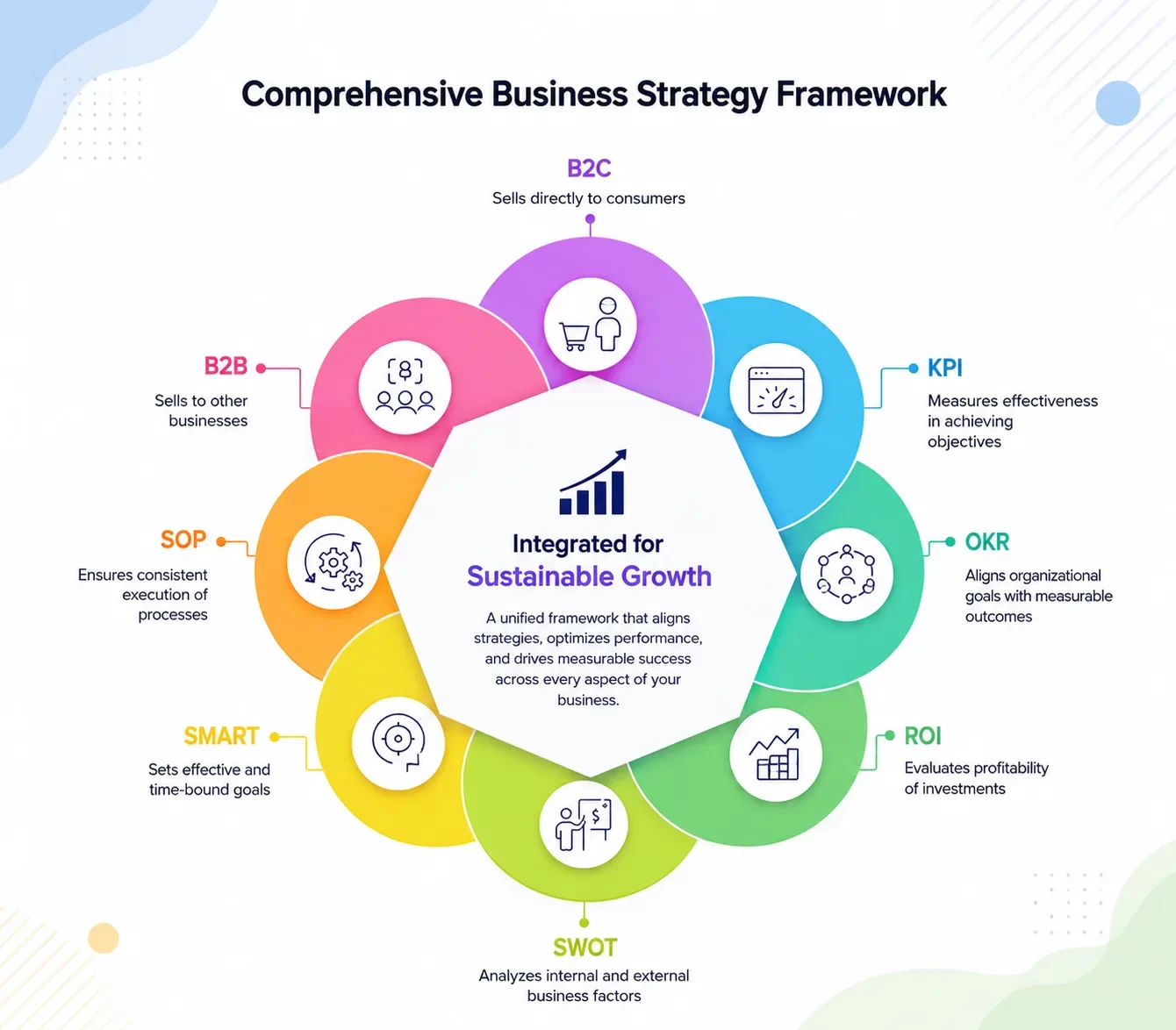
- KPI – Key Performance Indicator
A measurable value used to evaluate how effectively a business or employee is achieving objectives. - OKR – Objectives and Key Results
A goal-setting framework that aligns organizational objectives with measurable outcomes. - ROI – Return on Investment
Measures the profitability or value generated from an investment. - SWOT – Strengths, Weaknesses, Opportunities, Threats
A strategic planning framework used to evaluate internal and external business factors. - SMART – Specific, Measurable, Achievable, Relevant, Time-bound
A popular framework for setting effective business goals. - SOP – Standard Operating Procedure
Documented instructions describing how to complete recurring business processes consistently. - B2B – Business to Business
Companies that sell products or services to other businesses. - B2C – Business to Consumer
Companies that sell directly to individual consumers.
Project Management
- PM – Project Manager or Project Management
Refers to the individual or discipline responsible for planning and executing projects. - PMP – Project Management Professional
A globally recognized project management certification. - WBS – Work Breakdown Structure
A framework for dividing large projects into smaller, manageable tasks. - RACI – Responsible, Accountable, Consulted, Informed
A responsibility assignment matrix defining roles within a project. - Gantt Chart
A visual project timeline showing tasks, durations, and dependencies. - SLA – Service Level Agreement
An agreement defining expected service standards between parties. - SOW – Statement of Work
A document outlining project scope, deliverables, timelines, and responsibilities.
Human Resources
- HR – Human Resources
The department responsible for recruiting, employee relations, benefits, and workforce management. - PTO – Paid Time Off
Employee leave that includes vacation, personal days, and sometimes sick leave. - FTE – Full-Time Equivalent
A measurement used to represent employee workload. - DEI – Diversity, Equity, and Inclusion
Organizational initiatives that promote an inclusive workplace. - PIP – Performance Improvement Plan
A structured plan to help employees improve performance. - EVP – Employee Value Proposition
The unique benefits and experience an organization offers employees.
Finance & Operations
- EBITDA – Earnings Before Interest, Taxes, Depreciation, and Amortization
A financial metric used to evaluate business performance. - OPEX – Operating Expenses
The day-to-day costs of running a business. - CAPEX – Capital Expenditure
Investments made in long-term business assets. - COGS – Cost of Goods Sold
The direct costs associated with producing goods or services. - P&L – Profit and Loss
A financial statement summarizing revenue, costs, and profitability. - TCO – Total Cost of Ownership
The complete cost of purchasing, operating, and maintaining an asset.
Sales & Marketing
- CRM – Customer Relationship Management
Software and strategies used to manage customer relationships and sales opportunities. - MQL – Marketing Qualified Lead
A lead that has shown interest and meets marketing qualification criteria. - SQL – Sales Qualified Lead
A lead ready for direct engagement by the sales team. - CAC – Customer Acquisition Cost
The average cost of acquiring a new customer. - CLV – Customer Lifetime Value
The total revenue a customer is expected to generate throughout the relationship. - CTR – Click-Through Rate
The percentage of users who click on a link or advertisement.
Technology & Digital Business
- API – Application Programming Interface
Technology that enables different software systems to communicate. - SaaS – Software as a Service
Cloud-based software delivered through a subscription model. - ERP – Enterprise Resource Planning
Software that integrates core business operations such as finance, inventory, and manufacturing. - AI – Artificial Intelligence
Technology that enables computers to perform tasks typically requiring human intelligence. - BI – Business Intelligence
Tools and processes used to analyze business data for better decision-making. - RPA – Robotic Process Automation
Technology that automates repetitive business processes. - MFA – Multi-Factor Authentication
An additional security layer requiring multiple forms of identity verification. - SSO – Single Sign-On
Authentication technology allowing users to access multiple applications with one login.
How CRM Software Helps Managers Stay Organized
While understanding management terminology is important, modern managers also need the right tools to put these concepts into practice. For example, KPIs, sales pipelines, project tasks, customer communications, and workflow automation can all be managed within a centralized CRM platform.
Arches CRM helps businesses organize customer relationships, automate repetitive processes, manage sales pipelines, assign tasks, and provide real-time dashboards that support informed management decisions.
By bringing sales, communication, automation, and reporting into one platform, managers spend less time switching between applications and more time focusing on growth and customer success.
Final Thoughts
Management abbreviations are more than workplace jargon—they represent important business concepts that drive strategy, operations, finance, human resources, and technology. Learning these acronyms helps professionals communicate more effectively, understand business discussions, and contribute with greater confidence.
Whether you're an aspiring manager or an experienced executive, keeping these 41 abbreviations in your professional toolkit will make navigating today's business environment much easier.